Wonach suchen Sie?
1. Warum sind die Anforderungen an Druckluft am strengsten?
In Produktionsanlagen für Lebensmittel und Getränke dient Druckluft nicht lediglich als „Energiequelle“, sondern als das „vierte Medium“, das direkt mit Rohstoffen, Halbfertigprodukten, Fertigwaren und Verpackungen interagiert—und durchläuft jede Stufe des Produktionsprozesses, vom Mischen und Vermengen bis zur Abfüllung und Etikettierung sowie von der Verpackung bis zur Versiegelung. Das Vorhandensein von Ölnebel, Kondensat oder Mikroorganismen in Druckluft kann Produkte direkt verunreinigen und zu überhöhten Fremdpartikelwerten, verkürzter Haltbarkeit oder sogar Produktrückrufen führen. Folglich legen internationale Lebensmittelstandards wie ISBT, BRC und IFS die Sauberkeitsklassifizierung von Druckluft als entscheidendes Prüfkriterium fest.
Grundprinzip: Lebensmitteltaugliche Druckluft muss von der Quelle aus zu 100 % ölfrei sein, anstatt zunächst mit Öl verunreinigt und anschließend gefiltert zu werden.
II. Wie sollte der Standard für lebensmitteltaugliche Druckluft gelesen werden?
Der in der Branche am häufigsten zitierte Standard ist ISO 8573-1:2010, der drei Arten von Verunreinigungen kategorisiert—Feststoffpartikel, Feuchtigkeit und Ölgehalt—in unterschiedliche Klassen.
|
Klassencode |
Feststoffpartikel (Partikel/m³) |
Drucktaupunkt (°C) |
Ölgehalt (mg/m³) |
|
Klasse 0 |
Durch Verhandlung zwischen dem Anwender und dem Hersteller festzulegen |
Durch Verhandlung zwischen dem Anwender und dem Hersteller festzulegen |
Durch Verhandlung zwischen dem Anwender und dem Hersteller festzulegen |
|
Klasse 1 |
≤ 20.000(0,1–0,5 μm) |
≤ -70 |
≤ 0,01 |
|
Klasse 2 |
≤ 400.000(0.1–0.5 μm) |
≤ -40 |
≤ 0.1 |
Klasse 0 in der Tabelle stellt die höchste Güteklasse dar, ist jedoch kein fester Wert (nicht einfach ≤0,003 mg/m³). Gemäß ISO-Normen wird Klasse 0 als „Druckluft sauberer als Klasse 1 (≤0,01 mg/m³)“ definiert. Die spezifischen Grenzwerte müssen von Geräteherstellern unter festgelegten Prüfbedingungen gemessen und verifiziert werden, wobei entsprechend ein vollständiger Maschinenprüfbericht ausgestellt wird. Dies zeigt, dass die Luftqualität der Klasse 0 am Hauptaggregat eines ölfreien Kompressors erreicht werden muss. Der Versuch, den Ölgehalt mithilfe nachgeschalteter Aktivkohlefilter von Klasse 2 auf Klasse 0 zu reduzieren, birgt während der kontinuierlichen Produktion äußerst hohe Risiken und verursacht zudem überhöhte Kosten für den Filterelementaustausch. Dies ist eine kritische Grenze, auf die ausländische Lebensmittelauditoren (wie BRC/IFS-Auditoren) besonders achten.
III. Analyse des Gasverbrauchs während des gesamten Lebensmittel- und Getränkeproduktionsprozesses
3.1 Mischen & Vermengen
Druckluft treibt pneumatische Ventile und Mischer an, um eine gründliche Zutatenvermischung zu erreichen, gefolgt vom pneumatischen Transport von Sirup, Konzentrat usw. aus Lagertanks zu Mischtanks. Einige Prozesse verwenden eine direkte Belüftungsrührung, bei der das Gas zu 100 % ölfrei und geruchlos sein muss; andernfalls kann es die Rohmischung direkt verunreinigen. Gasanforderungen: 0,6–0,8 MPa, kontinuierliche Versorgung.
3.2 Abfüllen
Unter den drei gängigen Abfüllverfahren—isobares Abfüllen, Unterdruckabfüllen und atmosphärisches Abfüllen—steuert Druckluft nicht nur den Betrieb des Abfüllventils, sondern tritt beim isobaren Abfüllen auch direkt in die Flasche ein und kommt mit der Flüssigkeitsoberfläche in Kontakt. Der Ölgehalt muss null betragen, und Partikel sowie Feuchtigkeit müssen streng kontrolliert werden; andernfalls kann es zu Füllstandabweichungen, Schaumbildung, verstopften Düsen oder sekundärer Kontamination am Flaschenmund kommen. Zu den Gasanforderungen gehören eine hohe Durchflussrate und ein stabiler Druck, typischerweise mit einem vorgeschalteten Adsorptionstrockner und Sterilfilter.
3.3 Flaschenblasen
Der PET-Blasformprozess stellt die gasintensivste Phase in Produktionslinien dar: Mittelschnelle Maschinen verbrauchen 2–6 m³/min, während Hochgeschwindigkeitsmodelle 10 m³/min überschreiten und einen Druckbereich von 2,5–4,0 MPa erfordern. Druckluft wird direkt in die Flaschenform eingespritzt, um die Formgebung zu ermöglichen, und Ölnebel haftet an der Innenfläche von PET-Flaschen und ist für Verbraucher sichtbar. Ölhaltige Maschinen erfordern eine mehrstufige Aktivkohlefiltration, was häufige Filterwechsel notwendig macht und Kontaminationsrisiken birgt. Zu den Betriebsanforderungen gehören hoher Druck, hohe Durchflussrate, minimale Pulsation und null Ölgehalt.
3.4 Verpackung
Zylinder und pneumatische Greifer werden in Prozessen wie Etikettieren, Verschließen, Codieren, Kartonieren und Palettieren eingesetzt und durch Druckluft angetrieben. Obwohl sie nicht direkt mit der Innenfläche der Produkte in Kontakt kommen, kann übermäßiger Ölnebel das Erscheinungsbild der Flaschen verunreinigen und zu schlechter Etikettenhaftung sowie verschwommenen Codierungen führen. Betriebsdruckanforderungen: 0,6–0,8 MPa mit minimalen Druckschwankungen und schneller Reaktion.
IV. Die drei wichtigsten technischen Vorteile zur Erreichung von Klasse 0
Der gängige technische Ansatz verwendet eine trockene, ölfreie Doppelschraubenausführung—kein Öl wird in die Hauptkammer eingespritzt; mehrere Dichtungsschichten isolieren das Getriebe von der Verdichtungskammer; außerdem wird eine hybride Kühlung aus Wasser-/Ölkühlung mit Permanentmagnet-Frequenzumrichterantrieb kombiniert. Drei Hauptmerkmale:
1. Abdichtung und Isolierung: Doppel-Lippen-Öldichtung + Labyrinthdichtung + Luftschleier
Die trockene ölfreie Maschine hält durch hochpräzise Synchronzahnräder (AGMA-Klasse 13) einen präzisen Abstand zwischen den Rotoren ein. Beide Enden der Haupteinheit verwenden eine Kombination aus "Doppel-Lippen-Öldichtungen + Labyrinthdichtungen", ergänzt durch Mikro-Überdruck-Luftdichtungen, die eine Luftbarriere erzeugen—und damit die wesentliche Barriere für einen dauerhaft ölfreien Betrieb bilden.
2. Kombinierte Kühlung: Zweikreissystem mit Öl- und Wasserkühlung
Für die Primärverdichtung wird ein wassergekühlter Mantel verwendet; für die Sekundärverdichtung kommt eine Kombination aus ölgekühlten und wassergekühlten Systemen zum Einsatz. Das Kühlmedium gelangt während des gesamten Prozesses niemals in die Verdichtungskammer, wodurch eine Kreuzkontamination physisch verhindert wird.
3. Permanentmagnet-Frequenzumrichterantrieb (PM VSD): Sauber und energieeffizient
Die Blasformmaschine benötigt eine pulsierende Gasversorgung und einen stabilen Gasstrom für Füll- und Verpackungsprozesse; herkömmliche Maschinen mit Industriefrequenzbetrieb laufen auch bei geringer Auslastung weiterhin mit voller Leistung, was zu erheblichen Energieverlusten führt. Der Permanentmagnet-Frequenzumrichter passt die Drehzahl dynamisch anhand der Rückmeldung des tatsächlichen Gasbedarfs an und erreicht gemessene Energieeinsparungen von 25 %–35 %, während gleichzeitig die durch häufige Lastwechsel verursachte Betriebsbelastung der Haupteinheit reduziert und deren Lebensdauer verlängert wird.
V. Referenzkriterien für die Modellauswahl
Bei der Auswahl der Ausrüstung wird empfohlen, sich auf drei Hauptaspekte zu konzentrieren: ob die Haupteinheit tatsächlich zu 100 % ölfrei ist, ob sie eine praktische Zertifizierung der Klasse 0 erhalten hat und ob ihre Dichtungsstruktur langfristig validiert wurde. Nachfolgend sind Referenzkriterien für drei typische Prozessstufen in Lebensmittelproduktionsanlagen aufgeführt:
|
Prozessschritt |
Merkmale der Gasnutzung |
Referenzrichtung |
|
Mischen / Füllen / Verpacken |
0,6–0,8 MPa, kontinuierliche Gasversorgung |
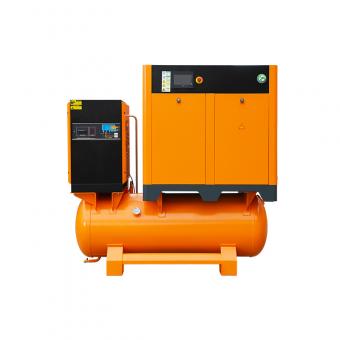
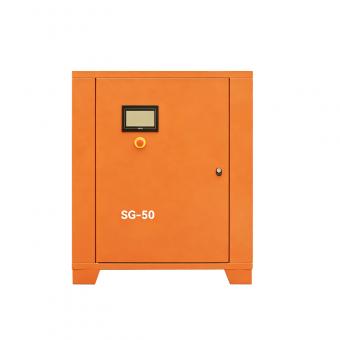
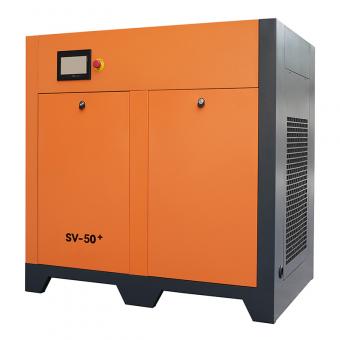
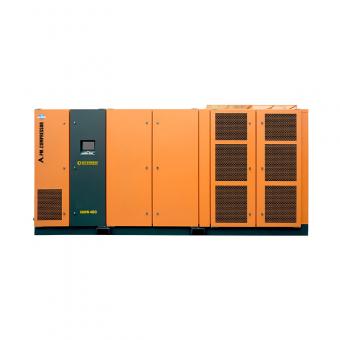
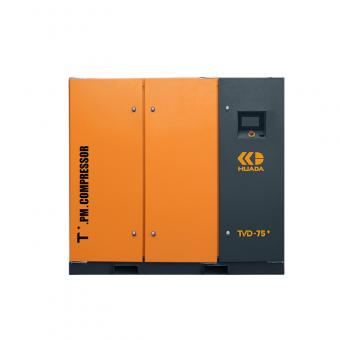
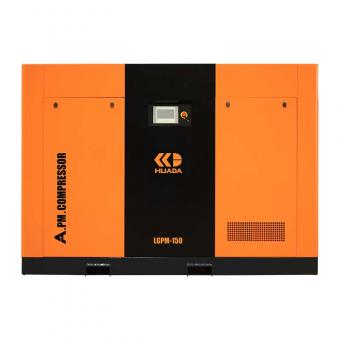
HDW PM VSD Permanentmagnet-Frequenzumrichter-ölfreier Schraubenmotor (Niederspannungstyp), 55–315 kW, geeignet für Drücke von 0,7–1,0 MPa. |
|
Blasformen (Herstellung von PET-Flaschen) |
2,5–4,0 MPa; Gas wird für die Pulsation verwendet |
HDW PM VSD Permanentmagnet-Frequenzumrichter-ölfreier Schraubenmotor (Hochdrucktyp) mit zweistufiger Verdichtung. |
|
Belüftung / Hydraulischer Transport / Blasen |
0,08–0,2 MPa, großes Luftvolumen |
HDBS Permanentmagnet-Frequenzumrichter-ölfreies Gebläse, 7,5–450 kW, entwickelt als Ersatz für Roots-Gebläse. |
Vor der Auswahl eines Modells empfehlen wir, die folgenden Dokumente zur Bewertung einzuholen:
· ISO 8573-1 Klasse 0: Tatsächlicher Messbericht über die gesamte Luftausgabe des Geräts
· Querschnittsansicht der Dichtungsstruktur des Gehäuses
· Praktische Fallstudien für Kunden aus der Lebensmittel- und Getränkeindustrie sowie Tabellen zur Berechnung des Gasvolumens
VI. Fazit
In der Lebensmittel- und Getränkeindustrie entwickelt sich Druckluft von einer bloßen „Energiequelle“ zu einem wichtigen „Prozessmedium“. Ein ordnungsgemäß zertifizierter ölfreier Kompressor beseitigt nicht nur Ölverunreinigungen, sondern dient auch als grundlegende Unterstützung für die Einhaltung von Qualitätskontrollvorschriften, die globale Produktverteilung und Energieeinsparungen mit Zielen zur Reduzierung von Kohlenstoffemissionen.
Für Aufrüstungen von Luftversorgungssystemen, energiesparende Modernisierungen oder Projekte zum Bau neuer Anlagen wenden Sie sich bitte an das internationale Marketingteam von Huada.


 IPv6 Netzwerk unterstützt
 English
 français
 Deutsch
 русский
 español
 português
 日本語
日本語 한국의
한국의 ไทย
ไทย 中文
中文